Car Hit Your Garage Door? Here’s What to Do Next
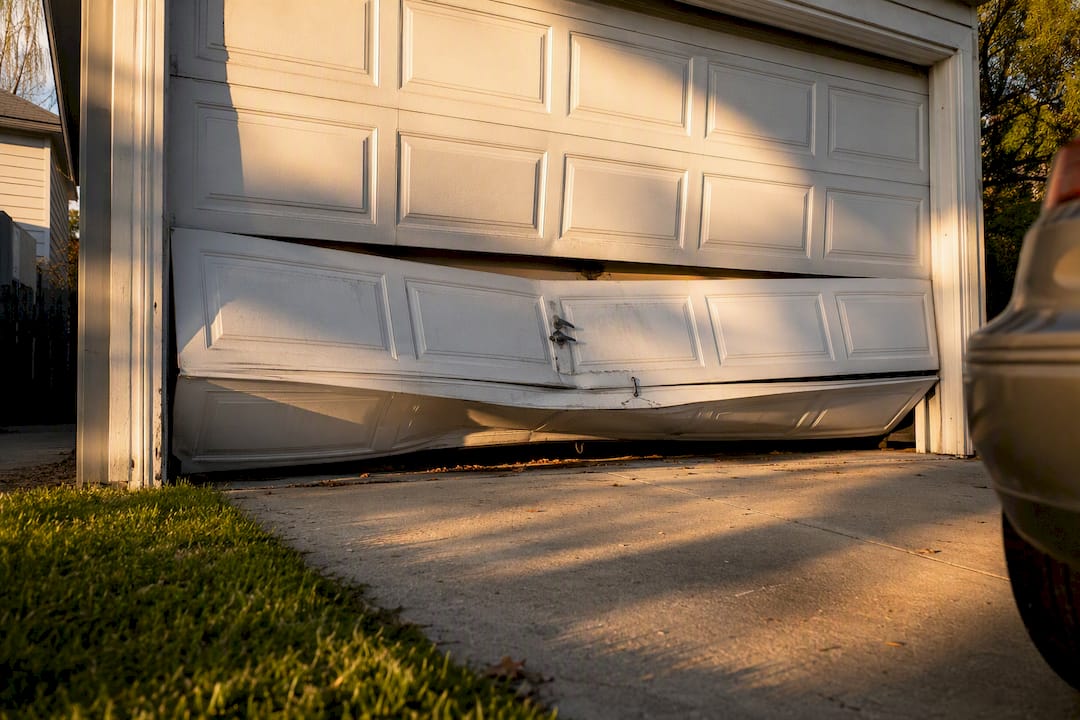
If your car hit your garage door, stop using the opener immediately, keep everyone clear of the area, and photograph the damage from several angles before touching anything. If the door or vehicle is stuck, or you see hanging cables, bent tracks, or a crooked panel, don’t force it. Call a professional technician instead of troubleshooting it yourself.
TL;DR:
- If the garage door or vehicle shows signs of bent tracks, hanging cables, or broken springs after a hit, avoid attempting repairs and call a professional immediately.
- Cosmetic dents may hide serious issues like misaligned tracks, snapped cables, or broken springs, which require urgent professional assessment and possible replacement.
- Opening or testing the door after impact is only safe if it appears straight, balanced, and free of visible damage; otherwise, stop and seek technician evaluation.
- Insurance claims depend on who was at fault and whether the damage involves structural parts, with potential effects on premiums for small repairs.
Table of Contents
- What To Do In The First 5 to 15 Minutes After A Hit Garage Door
- How Do You Tell Cosmetic Damage From Structural Damage?
- Is It Safe To Open A Garage Door After It’s Been Hit?
- Should You Repair The Panel Or Replace The Whole Door?
- What Does It Cost To Fix A Garage Door That Was Hit?
- Does Insurance Cover A Garage Door Hit By A Car?
- When Do You Need To Call A Garage Door Technician Right Away?
- Why Trust A Local Team With Impact Damage Repairs
- Get Your Garage Door Fixed Fast After A Collision
- Sources
- FAQ
What To Do In The First 5 to 15 Minutes After A Hit Garage Door
The first quarter hour after your car hit the garage door sets the tone for everything that follows, from your insurance claim to whether the repair costs you $250 or $2,500. Move deliberately, not fast.
- Park and shut things down. Set the parking brake, turn off the engine, and get anyone nearby, especially kids and pets, away from the door and vehicle.
- Scan before you touch anything. Look outside first at the exact strike point, then step inside and check the tracks, springs, and cables, then finally the opener unit mounted on the ceiling.
- Photograph everything. Wide shots of the whole door, close-ups of dents and cracked panels, any paint transfer from your bumper, and (if another vehicle was involved) the license plate and VIN.
- Decide on the opener. If the door looks structurally sound, unplug the opener from the wall outlet rather than yanking the red emergency release cord right away, since pulling that cord with a damaged spring can cause the door to drop unexpectedly.
A few things matter more than they seem to in that first stretch:
- Don’t assume a “small” dent means small damage. Impact often transfers force into the tracks and rollers even when the panel barely shows it.
- Skip the urge to “just try it once” to see if the door still opens. That single test run can turn a $300 panel repair into a $1,200 spring and track replacement.
- If a second vehicle is involved, exchange insurance information the same way you would for any fender bender, since documenting the scene properly speeds up both your homeowners and auto claims.
- Note the time and date. Insurers ask for this, and your memory of “sometime last week” won’t hold up as well as a photo timestamp.
Pro Tip: Take your photos before you sweep up any debris or move your car. Insurance adjusters and repair techs both want to see the scene as close to the moment of impact as possible, not a tidied-up version of it.
Following this checklist matches what experienced garage door professionals recommend as the standard first response: stop, document, and call someone who can assess it properly rather than guessing.
How Do You Tell Cosmetic Damage From Structural Damage?
Not every dent is created equal, and telling the difference is the whole reason this decision feels stressful. Here’s how to read what you’re looking at without putting your hands anywhere near a spring or cable.
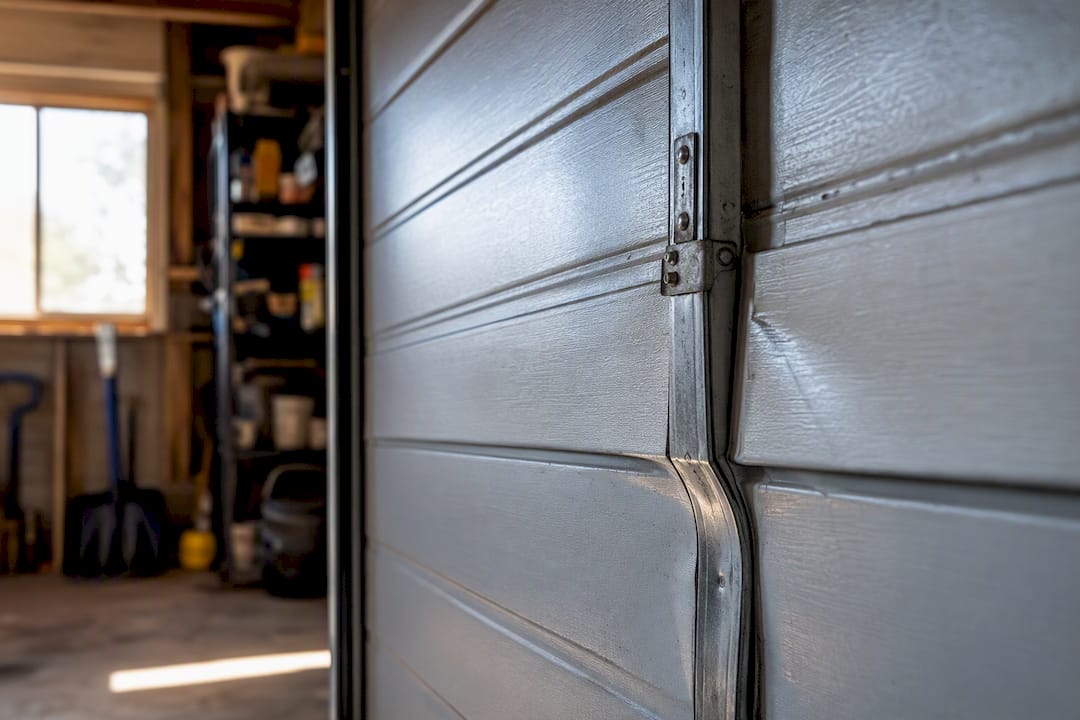
V-fold or crease in a panel means the aluminum or steel has buckled inward, usually along a stile (the vertical seam between sections). This is cosmetic on its own, but it can throw off the door’s balance if it’s severe enough.
Popped rollers happen when the wheel that rides in the track gets knocked loose from its bracket. You’ll often see this paired with a section of track that’s visibly bent or pulled away from the wall.
Bowed or dented track is a bigger problem than it looks. A track even slightly out of alignment will bind the door, strain the opener motor, and can eventually cause a derailment.
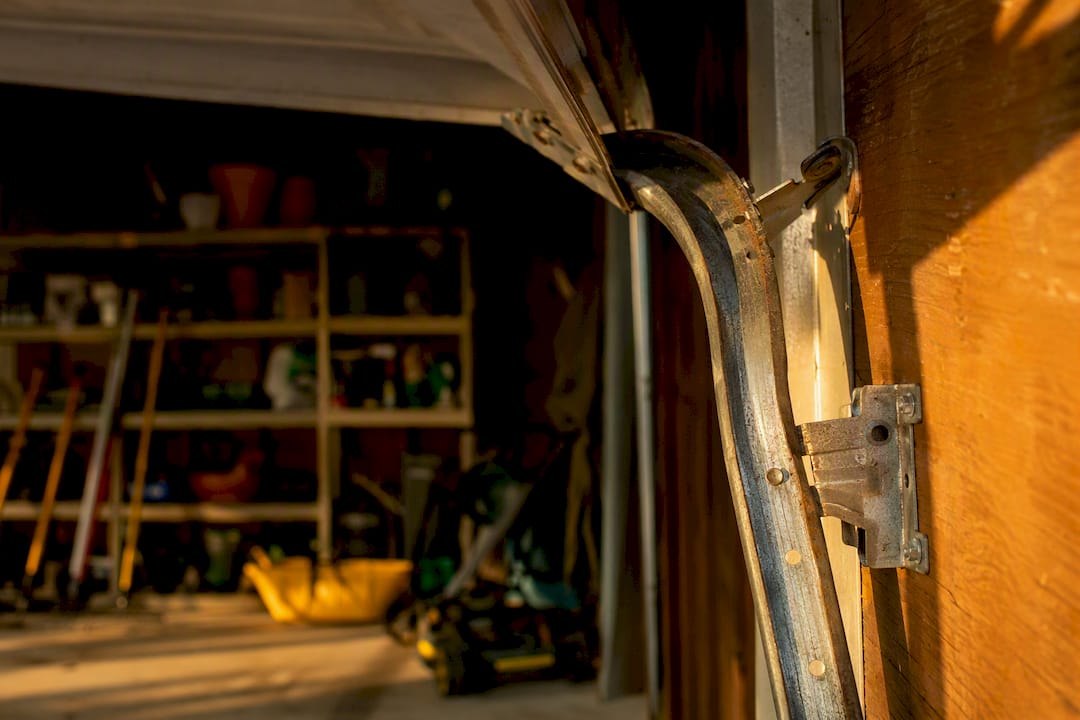
Slack or hanging cable is a stop-everything signal. A garage door’s cables hold enormous tension as part of the counterbalance system, and a cable that’s gone loose or snapped means the door could drop without warning.
Broken spring you’ll usually hear before you see. A snapped torsion spring makes a loud bang, sometimes described as sounding like a gunshot, and it instantly turns your 200-pound door into dead weight with no safe way to lift it by hand.
Here’s how that plays out in practice:
- Mild scenario: A single scuffed panel with a shallow dent, no track distortion, door still sits level. Likely a same-day cosmetic repair.
- Moderate scenario: One bent panel plus a popped roller on the same side. The door might still close, but the track needs realignment before you run the opener again.
- Severe scenario: Visible gap in a cable, door hanging crooked, or a loud bang at the moment of impact. Treat this as an emergency and don’t touch the opener at all.
Experts who specialize in garage door mechanics point out that cosmetic dents frequently mask damage to the counterbalance system, the springs, cables, and drums that manage the door’s weight. A door can look fine from the driveway and still be dangerously out of balance.
When the damage falls anywhere between mild and severe, get at least two written estimates before committing to a repair plan. Contractors don’t always agree on scope, and a second opinion has saved plenty of homeowners from paying for a full replacement they didn’t actually need.
Is It Safe To Open A Garage Door After It’s Been Hit?
If there’s any doubt, the answer is no. Running the opener on a compromised door risks derailing it entirely, snapping a strained cable, or burning out the motor as it fights against a door that’s no longer balanced correctly.
Treat any of these as a hard stop, no operating the door until a technician has looked at it:
- The door sits visibly crooked or at an angle in the opening
- A cable is hanging loose or you can see it’s frayed
- One or more rollers have popped out of the track
- The door lifts unevenly, faster on one side than the other
If none of those apply and the door looks straight, you can test it cautiously. Use the manual emergency release to lift it a few inches by hand first. It should move smoothly and feel roughly balanced, not fight you or slam back down. Listen for grinding or scraping as you go. If everything feels normal, a short test with the opener is reasonable. If you hear anything off, stop immediately and call a technician.
Until repairs happen, secure the opening with a temporary brace or padlock the manual release so the door can’t be forced open from outside. This isn’t a permanent fix, but it buys you a day or two without leaving your home exposed. For more on catching problems before they become emergencies, these warning signs are worth bookmarking regardless of how this particular incident turns out.
Pro Tip: If you’re not sure whether the door is balanced, don’t experiment with the opener to find out. A technician can check spring tension safely in a few minutes, and it’s a lot cheaper than a motor replacement.
Should You Repair The Panel Or Replace The Whole Door?
Run the numbers before you fall in love with either option. A widely used rule in the industry is the 50% replacement threshold: if your repair estimate comes in at more than about half the cost of a new door in the same style and tier, replacement is usually the smarter move financially. Below that line, repair almost always makes sense.
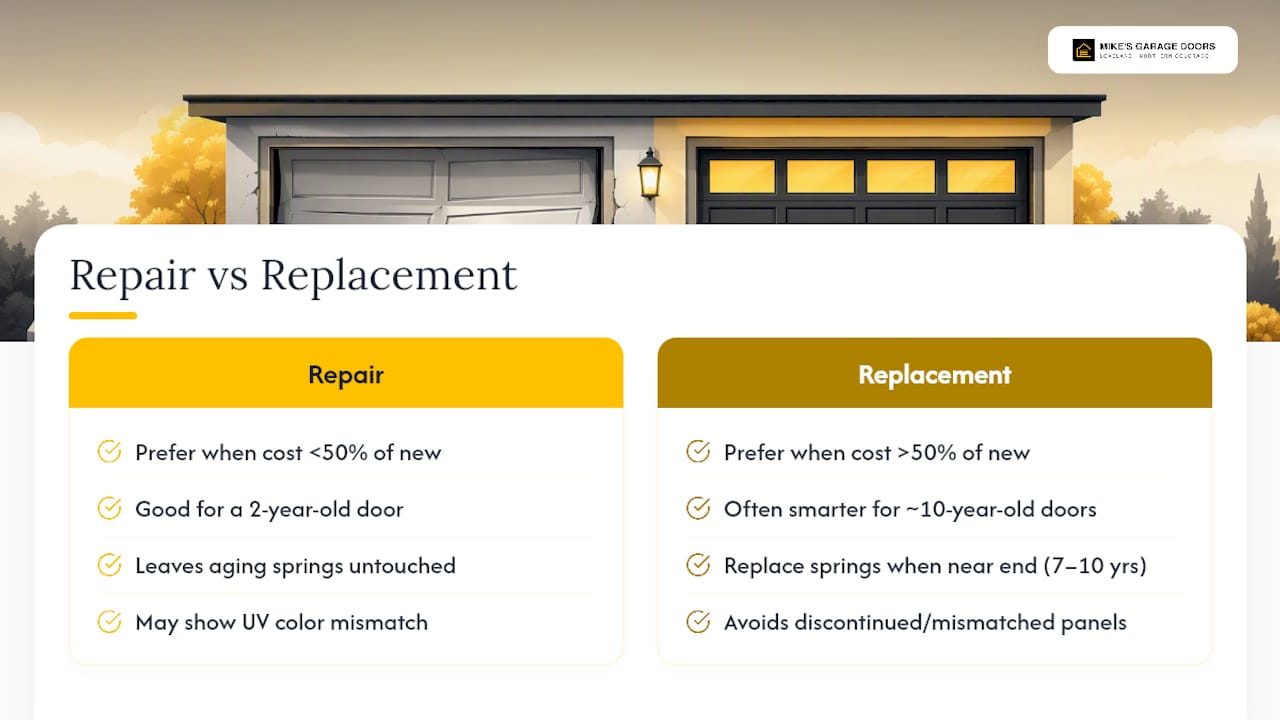
Age changes the math, though. A door that’s already 10 years old and takes a hard hit is a different conversation than a 2-year-old door with a single dented panel. Torsion springs typically last around 10,000 cycles, roughly 7 to 10 years of normal use, so a decade-old door with impact damage is often close to needing new springs anyway, even without the collision. Garage door specialists note that a panel repair which leaves aging springs untouched can turn into a full replacement within a couple of years regardless.
Then there’s the matching problem. Garage door panels fade with UV exposure over time, so a brand-new panel on a 6-year-old door often looks noticeably different in color, even from the same manufacturer. If your door’s specific style has been discontinued (which happens more than homeowners expect), matching panels may not exist at all, forcing a full replacement whether you wanted one or not.
Here’s a quick way to weigh your options:
Replacement also opens the door, so to speak, to upgrades you wouldn’t get from a straight repair: better insulation for energy costs, stronger security features, and a modern opener with a battery backup and smartphone controls. If you’re already facing a repair bill in the four figures, it’s worth asking your contractor for a side-by-side quote on both options before deciding. Two written estimates matter here just as much as they did during the initial damage assessment, since contractors can vary widely on both price and recommendation.
What Does It Cost To Fix A Garage Door That Was Hit?
Costs swing based on what exactly got damaged, and quotes from different contractors can look surprisingly different for what seems like the same job. Here’s a general sense of what to expect.
The overall median repair cost homeowners actually pay sits around $245, though that figure covers routine repairs, not necessarily collision damage. Impact jobs that involve multiple panels, bent tracks, and a damaged opener can climb into four figures fast.
A few things push your number higher:
- Emergency and after-hours calls. Same-day and evening service typically carries a premium over a scheduled weekday appointment.
- Bundled damage. A single hit rarely breaks just one thing. Springs, tracks, and rollers often get pulled into the same job.
- Panel matching. Custom colors, wood-look finishes, or discontinued styles cost more to source and install.
When you get a quote, ask for an itemized breakdown separating parts from labor, and get it in writing. A vague “$800 flat” estimate makes it hard to compare against a second quote or to know what you’re actually paying for. If your estimate lands well under your deductible, paying out of pocket is often simpler than filing a claim at all.
Does Insurance Cover A Garage Door Hit By A Car?
It depends on who was driving and which policy applies. If you or a household member accidentally backed into your own garage door, homeowners insurance typically covers the dwelling damage, since the door is part of the structure. If a third party at fault hit your door, their auto liability coverage usually applies instead, and your insurer may pursue subrogation to recover costs from theirs.
Before you call anyone, gather this:
- Photos from the initial documentation, wide and close-up shots plus any paint transfer or debris
- Two written repair estimates from licensed contractors
- Vehicle information if a second driver was involved, including their insurance details
- A simple timeline: date, time, and how the impact happened
- Your policy’s declaration page, so you know your exact deductible before you file
That last point matters more than most homeowners realize. Filing a claim gets logged in the CLUE database (Comprehensive Loss Underwriting Exchange), which insurers reference when calculating future premiums. A single claim can affect your rates for roughly three years, even for a relatively small payout. A practical rule of thumb: if your repair estimate is less than roughly twice your deductible, paying out of pocket often costs less over time than the premium increase from filing.
If you do decide to file, contact your insurer promptly, submit your documentation, and let them know upfront whether a third party may be at fault. That detail changes which policy takes the lead and whether subrogation comes into play later.
When Do You Need To Call A Garage Door Technician Right Away?
Some situations don’t leave room for waiting on a callback. Call for emergency service immediately if you see a broken spring, a hanging or snapped cable, a door that’s come off its track, or if your vehicle is physically pinned and you can’t move it safely on your own.
Once a technician arrives, expect them to brace the door first so it can’t shift or fall further, then inspect the springs, cables, and tracks before attempting anything else. If your car is trapped, they’ll perform a controlled extraction, sometimes bracing the door and freeing the vehicle before making permanent repairs, followed by a written estimate covering both the temporary fix and the follow-up work needed. This kind of rapid, on-site door repair response is standard practice across the industry when a vehicle or a person’s safety is on the line.
Before the technician gets there, have this ready:
- Your address and a description of what happened
- Whether the vehicle is still in contact with the door
- Any signs of a broken spring or hanging cable you’ve noticed
- The photos you already took
Prioritize safety over cost in the moment. A rushed decision to force the door open yourself to “save the emergency fee” is exactly how minor damage turns into a trip to the ER.
Why Trust A Local Team With Impact Damage Repairs
Garage door impact damage isn’t a job for guesswork, and it’s not one you want to hand to whoever answers the phone fastest. Mikes garage doors Loveland colorado built its reputation on same-day repairs, with about 90% of jobs completed the day they’re called in, because a door that’s been hit rarely waits well.
What actually matters to a homeowner staring at a dented panel and a hanging cable is honesty about what’s really going on. Upfront phone estimates mean no surprise charges once a technician is standing in your driveway. Experienced techs who’ve seen everything from a snapped torsion spring to a fully derailed panel know the difference between a repair that holds and one that fails again in six months. Veterans get a 10% discount, and every job comes backed by a real warranty, not a verbal promise. That combination, transparency plus technical judgment, is exactly what an impact-damaged door needs: someone who tells you straight whether it’s a $300 fix or a door that’s genuinely done.
— Eddie
Get Your Garage Door Fixed Fast After A Collision
Mikes garage doors Loveland colorado is the practical alternative to guessing your way through an impact repair or waiting days for a callback from a bigger regional outfit. Homeowners across Loveland and Northern Colorado get a straight phone estimate before a technician ever shows up, and with roughly 90% of jobs wrapped up the same day, a hit garage door doesn’t have to sit exposed overnight while you wait on a schedule.

Whether you’re dealing with a single dented panel, a popped roller, or a spring that let go on impact, the same family-owned team that handles routine tune-ups also handles the urgent calls, springs, tracks, openers, and everything in between. Veterans get 10% off, every repair carries a real warranty, and there’s no upsell games buried in the estimate. If your car hit the garage door today, check available service options and get a technician looking at it before small damage turns into a bigger bill.
Sources
- Does homeowners insurance cover garage door damage by your car?
- When to replace vs repair garage door
- Garage door panel replacement guide
- First things to do when a car damages your garage door
- Garage door repair cost
FAQ
What happens if I accidentally hit my garage door?
Stop using the opener right away, photograph the damage from multiple angles, keep people clear of the door, and call a professional to inspect it, especially if you notice a hanging cable, popped roller, or crooked panel.
What should I do if my car hits the garage door?
Turn off the engine, set the parking brake, and check for visible signs of structural damage like bent tracks or a bowed panel before touching the opener; if the door looks fine and level, a cautious manual test may be safe, but any doubt means calling a technician.
Will a garage door go back up if it hits something?
Modern openers have safety sensors designed to reverse the door if it senses an obstruction, but an impact from a vehicle can bypass that system entirely by damaging the tracks or springs, so don’t assume the safety reversal protects you after a collision.
How much does it cost to fix a garage door that was hit?
Costs vary widely depending on what’s damaged. Single panel repairs typically run $250 to $860, while a full replacement can range from $750 to $3,500 or more, and the reported median homeowner-paid repair sits around $245 for routine, non-collision jobs.
Recommended
- Garage Door Off the Track? Don’t Force It — Here’s What to Do | Mike’s Garage Door Repair Loveland
- Garage Door Opener Not Working? Walk Through This 4-Minute Diagnostic Before You Call | Mike’s Garage Door Repair Loveland
- Noisy Garage Door Fix: Stop the Squeaks for Good
- Garage Door Services in Loveland, CO — Spring, Opener, Commercial & Custom
Need a hand with your door?
Talk to a real tech — most calls are diagnosed in under two minutes.


