
Loveland Homeowners: Garage Door Panel Replacement, Safe & $860 Avg
If one or two sections took the hit from a car bumper or a wild hailstorm, replacing just those panels is usually the smarter, cheaper move. If the damage is spread across multiple panels, or your door is old enough that matching parts are hard to find, a full door replacement often makes more sense. Either way, safety and proper matching aren’t optional, and costs vary widely by material and labor.
TL;DR:
- Replacing a damaged panel is most cost-effective when damage is limited to one or two sections; full door replacement is better for widespread or structural damage.
- Garage door panel replacement costs typically range from $860 to $3,440, influenced heavily by material choice, the number of panels, and labor rates.
- Matching panels becomes difficult if the door is over 15 years old or if the profile is discontinued, often necessitating repainting or full replacement.
- DIY replacement is feasible for damaged bottom panels with proper safety precautions, but complex jobs involving springs or custom parts require professional service.
- When sourcing panels, always verify the manufacturer label, color code, and style, and choose OEM parts for the best fit and finish, especially for critical or structural components.
Table of Contents
- When to repair a panel and when to replace the whole door
- Cost breakdown: ranges and what changes the price
- Can you replace just one panel? How to check feasibility
- How replacement works: a safety-first step sequence for homeowners and DIYers
- Where to buy panels and how to confirm fit and finish
- When to hire a pro and the exact questions to ask
- Why trust this guide: Mike’s Garage Door Repair field evidence
- Editorial perspective: cost versus long-term value
- How Mike’s Garage Door Repair can help with panel replacement
- Sources
- FAQ
When to repair a panel and when to replace the whole door
The decision starts with a walk around the door. A single dent, a hole from a stray basketball, or one warped section is usually a clean fix. Multiple distorted panels, a bent track, or sagging across the whole door point toward full replacement instead.
Age matters too. Doors older than about 15 years often use discontinued panel profiles, which makes matching tough or impossible, according to Clopay’s panel replacement guidance. Structural red flags, like cracked bottom brackets or a frame that’s pulled away from the wall, mean the problem goes deeper than cosmetics.
A few more things to check before you decide:
- Isolated damage on one or two sections usually favors a panel swap.
- Multiple warped panels or a bent track usually favor full door replacement.
- Homeowner’s insurance may cover storm or impact damage, worth a call before you pay out of pocket.
- Most panel swaps skip permits, but full door replacements sometimes trigger local permit rules, so check with your city first.
Cost breakdown: ranges and what changes the price
Budgeting starts with realistic numbers. A single garage door panel replacement typically runs from about $860 to $3,440, depending on material, how many panels need replacing, and local labor rates, according to This Old House’s cost breakdown. Multi-panel jobs climb fast once you’re buying several matched sections plus the labor to fit them.
Average single-panel replacement runs around $860, per cost data from This Old House, though custom colors or insulated steel push that number higher.
Material choice drives a big chunk of the spread:
- Plain steel panels sit at the budget end.
- Insulated steel adds cost but improves energy efficiency and noise control.
- Aluminum and fiberglass run mid-range and resist rust well.
- Wood and custom carriage-house styles sit at the top, often requiring special ordering.
Labor typically runs $60 to $70 per hour, with single-panel jobs taking one to two hours, though some contractors prefer flat fees for simple swaps. Hidden costs add up too: paint matching for faded sections, new hardware like rollers or hinges, and disposal fees for the old panel. Seasonal demand can also nudge pricing up during spring and fall, when scheduling gets tight.
Can you replace just one panel? How to check feasibility
Before you order anything, confirm the panel actually exists for your door. Here’s how:
- Find the manufacturer label, usually on the back of a panel or near the bottom corner of the door, and record the model number and section size.
- Note the exact panel style, including window cutouts, ribbing pattern, and color code.
- Call a dealer or the manufacturer with that information to confirm the section is still in production.
- If it’s discontinued, ask about close matches or custom fabrication options.
Matching fails most often because of sun fading, discontinued profiles, or custom carriage-house designs that were never mass produced. Clopay’s guidance on panel matching notes that even a correctly sized panel can look off once you account for years of UV exposure. When matching truly fails, your options are repainting the whole door for uniform color, ordering an expensive custom panel, or replacing the full door.
How replacement works: a safety-first step sequence for homeowners and DIYers
A single-panel swap is a realistic weekend project if you’re comfortable with hand tools and have a helper. Here’s the general sequence:
- Close the door fully and disconnect the opener so it can’t engage mid-job.
- Secure the door in place with clamps so it can’t shift or fall.
- Remove the hinges and hardware connecting the damaged panel to its neighbors.
- Slide out the damaged section.
- Fit the new panel and reattach hinges, rollers, and brackets.
- Reconnect the opener and test the door’s balance and the opener’s reversing function before calling it done.
Never touch the torsion spring. It’s under extreme tension, and a slip can cause serious injury or send the door crashing down. The U.S. Consumer Product Safety Commission specifically recommends testing the opener’s reversing feature and checking door balance regularly, since both are documented entrapment hazards.
Pro Tip: Place a 2x4 flat on the ground under the door and run the opener down. If the door doesn’t reverse the moment it touches the wood, stop and call a professional.

Expect one to two hours for a single bottom panel, longer for middle or top sections that require more disassembly.
Where to buy panels and how to confirm fit and finish
OEM panels from the original manufacturer or an authorized dealer give you the best shot at an exact match in color, profile, and insulation. Aftermarket sellers and salvaged panels cost less but carry more risk on fit and fade matching. A practical overview of sourcing options covers what to expect when shopping around.
Before ordering, measure the panel’s height and width, and photograph the manufacturer label along with any visible model or stamp code.
- Ask suppliers for the exact factory color code, not just a visual match.
- Confirm insulation thickness if energy efficiency matters to you.
- Ask about lead time and return policy before you commit to a custom order.
When to hire a pro and the exact questions to ask
Some jobs just aren’t worth the DIY risk. Hire a professional for anything involving torsion springs, an unbalanced door, top or middle panel sections, or discontinued models that need sourcing help. DASMA’s technical guidance on component substitution warns that mismatched or non-identical parts can compromise structural performance and even invalidate wind-load ratings, which matters more than most homeowners realize.
Before you hire anyone, ask:
- How will you source a matching panel, and what’s your plan if it’s discontinued?
- What warranty covers the parts and the labor?
- Can you show proof of insurance and licensing?
- How do you handle paint matching and disposal of the old panel?
Red flags worth walking away from: vague answers about sourcing, a bid with no itemized breakdown, or no proof of insurance when you ask.
Why trust this guide: Mike’s Garage Door Repair field evidence
This guide draws on practical field experience fixing garage doors across Northern Colorado.
Editorial perspective: cost versus long-term value
Swapping a panel saves real money when the damage is contained and the match is clean. But if your door is old, the panels are discontinued, or you’ve been eyeing better insulation or a style upgrade anyway, a new door is often the smarter long-term call. Factor in your maintenance cycle and resale plans before you commit to either path.
— Eddie
How Mike’s Garage Door Repair can help with panel replacement
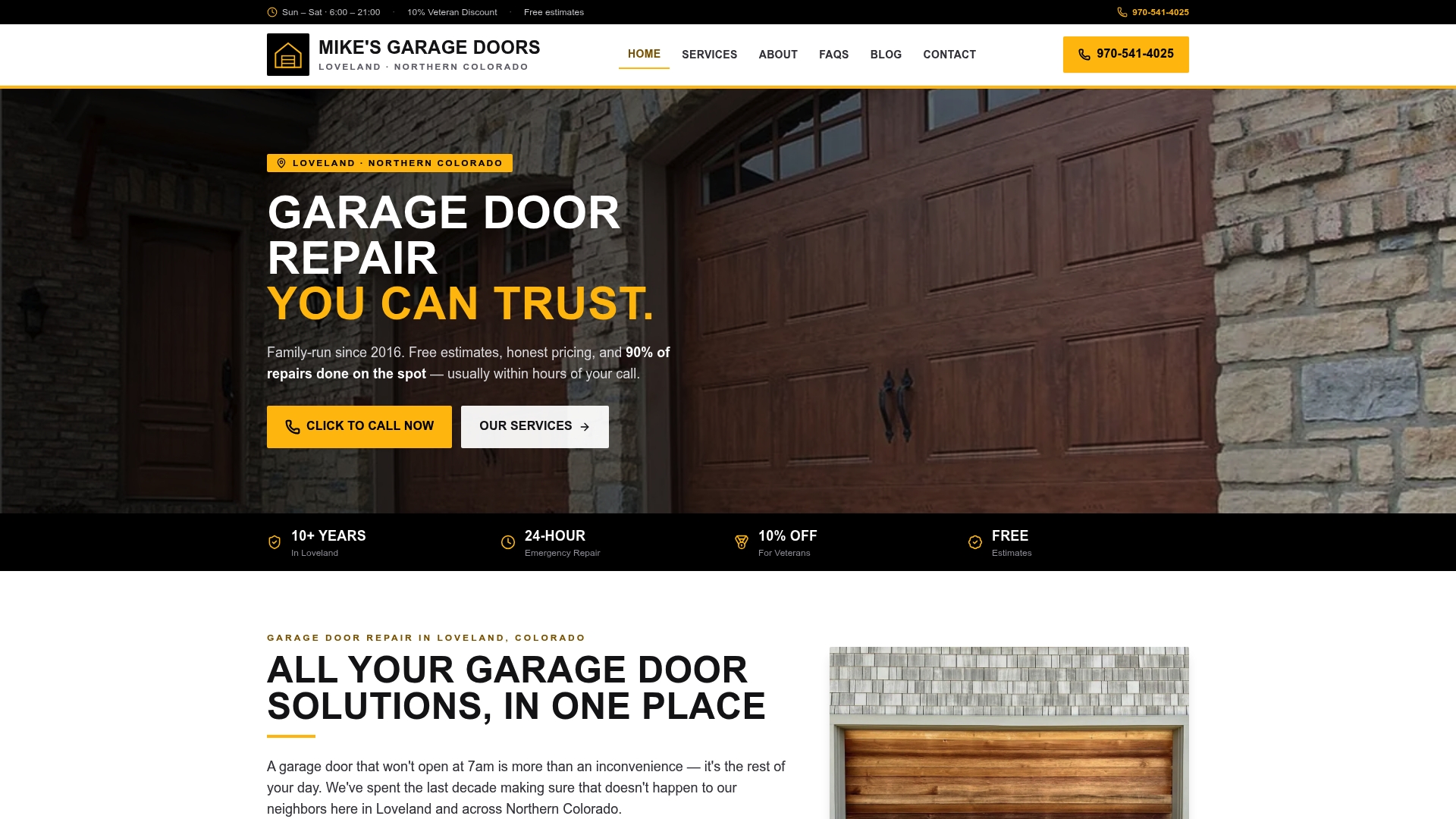
If you’re staring at a dented panel and not sure whether to fix it or replace the whole door, Mike’s Garage Door Repair handles that call every week across Loveland and Northern Colorado. Many repairs are completed promptly, and estimates begin with a clear phone conversation so you understand the cost before service.
To get a fast, accurate quote, have these ready:
- Photos of the damaged panel and its location on the door.
- The manufacturer label or model number, if you can find it.
- Any visible issues with balance, sagging, or track alignment.
A visit typically ends with an itemized quote, your matching options explained in plain terms, and a clear timeline. Request an estimate through our services page and get a straight answer before you spend a dime.
Sources
- Garage Door Panel Replacement Cost (This Old House)
- Can I replace my garage door panels? (Clopay)
- Garage door component substitution (DASMA technical data sheet)
- CPSC guidance on automatic garage door openers
FAQ
Can you replace just the panels on a garage door?
Yes, in most cases you can replace individual panels instead of the entire door, provided the manufacturer still produces that section and the color matches closely enough. Doors older than about 15 years are more likely to have discontinued profiles, according to Clopay’s guidance.
Can I buy just one garage door panel?
Yes, you can typically order a single panel through the original manufacturer or an authorized dealer, as long as you have the model number and section size from the door’s label. If the exact match isn’t available, you may need a custom order or full repainting for a seamless look.
How much does it cost to replace one panel on a garage door?
A single panel replacement typically costs around $860 on average, with a realistic range of about $860 to $3,440 depending on material and local labor rates, according to This Old House. Insulated steel, aluminum, and custom finishes push costs toward the higher end of that range.
How much does Home Depot charge to replace a garage door?
Home Depot does not publish a single fixed price for garage door replacement since costs depend on the contractor network, door material, and local market. For an accurate number, request quotes directly from local installers or garage door specialists who can assess your specific door and situation.
Recommended
Need a hand with your door?
Talk to a real tech — most calls are diagnosed in under two minutes.


