Garage Door Installation in Louisville, KY: What to Expect
If you need garage door installation in Louisville, KY, hire a licensed local independent installer or a local branch of a national franchise, not a big-box retailer’s contracted crew. That choice gets you faster response times, technicians who already know Jefferson County permit rules, and a company that stands behind its own warranty instead of routing you through a national call center. For a straightforward single-car replacement, budget a typical amount; a double-car door generally costs considerably more depending on material, insulation, and opener choice according to garage door cost calculator estimates.
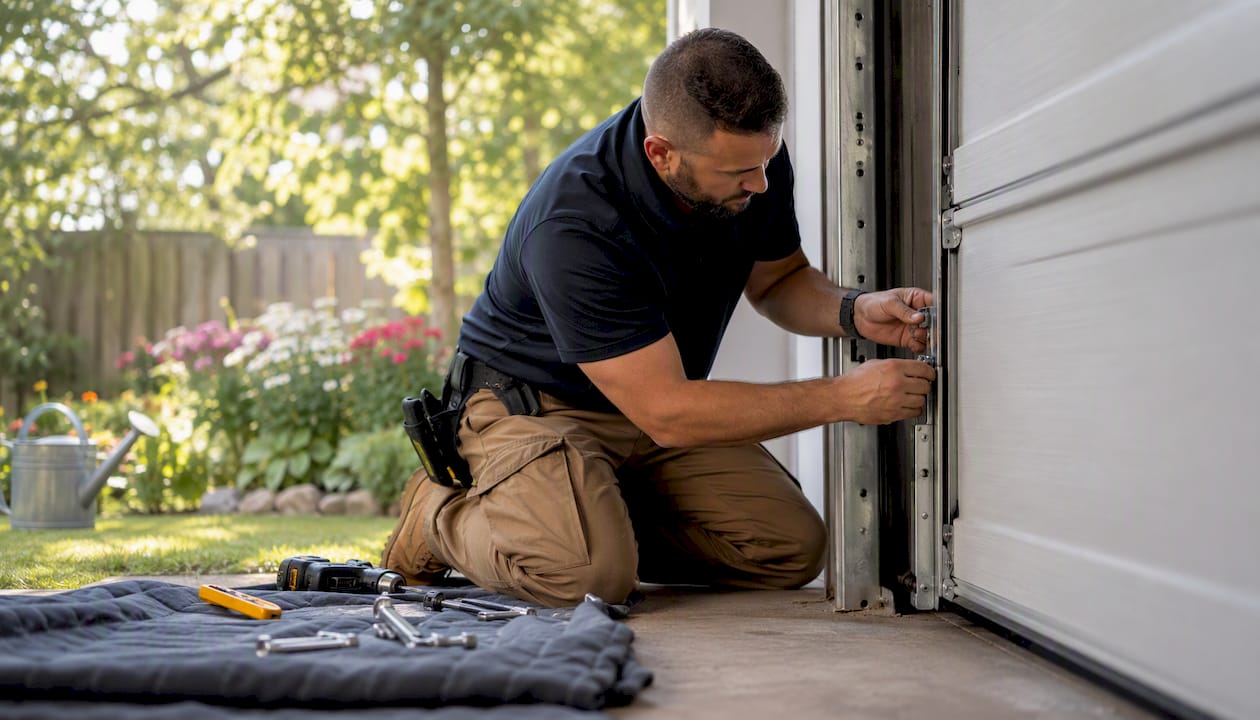
Most like-for-like replacements finish in a single visit. Here’s what a normal install day looks like:
- A two-person crew arrives with the door pre-ordered, removes the old panels and track, and installs the new door in 2 to 6 hours depending on size and complexity.
- You’ll get a written warranty covering both the manufacturer’s parts and the installer’s labor, plus a note on whether a permit was pulled (most straightforward swaps don’t need one; new openings usually do).
Key Takeaways
Hiring a licensed local installer for a like-for-like garage door replacement in Louisville typically costs $900 to $4,500 and finishes in a single day.
| Point | Details |
|---|---|
| Choose provider type first | Local independents and franchise branches beat big-box installs on response time and warranty clarity. |
| Know your price band | Single-car installs run $900 to $2,200; double-car doors run $1,800 to $4,500 depending on specs. |
| Expect a one-day install | Standard like-for-like swaps take 2 to 6 hours; new openings can take a full day or longer. |
| Ask the warranty question upfront | Confirm manufacturer versus installer warranty terms before signing anything. |
| Consider Mikes garage doors Loveland colorado for Northern Colorado | Offers phone estimates, same-day repairs, and direct warranty handling for readers in Loveland and Northern Colorado. |
Table of Contents
- What Does Garage Door Installation Cost in Louisville, KY?
- Which Type of Installer Should You Hire in Louisville?
- How Much Should You Budget for a New Garage Door in 2026?
- What’s the Difference Between a Replacement, a New Opening, and an Opener-Only Install?
- How Do You Choose the Right Installer and Avoid Bad Surprises?
- What Garage Door Materials and Openers Should You Consider?
- When Should You Repair Instead of Replace, and What Hidden Fees Show Up?
- What Should You Do Before Calling an Installer?
- How Do You Pay for a New Garage Door Installation?
- Why We Recommend Licensed Local Installers
- A Different Path If You’re in Northern Colorado, Not Louisville
- Sources
- FAQ
What Does Garage Door Installation Cost in Louisville, KY?
Kentucky’s statewide installed averages sit around a mid-range cost, with a spectrum from lower to premium expenses, according to state-level cost data. Louisville pricing tracks close to that state average, with urban labor rates nudging costs slightly above rural Kentucky benchmarks.
Which Type of Installer Should You Hire in Louisville?
Three provider types dominate the Louisville market, and each makes a different tradeoff between price, speed, and accountability. A local independent garage door company typically knows the neighborhood’s older housing stock, weather-related wear patterns, and permit quirks better than anyone else. A national franchise installer’s local branch brings manufacturer-backed warranties and deeper inventory, but you’re often working with a call center for scheduling. A big-box retailer’s installation service bundles the door purchase and install into one transaction, which can look cheaper upfront, but the actual installation is usually subcontracted out, and quality varies by which crew you draw. Overhead Door Company of Louisville represents another established option in the local market, operating as a branded dealer with access to factory-direct product lines.
| Provider Type | Best For | Typical Installed Price | Warranties | Availability | Install Time |
|---|---|---|---|---|---|
| Mike’s Garage Door Repair (model for local independents) | Fast local response, direct warranty handling | $900–$4,500 depending on scope | Manufacturer + local installer warranty, transparent phone estimates | Same-day to next-day for repairs; scheduled installs within days | 2–6 hours |
| Local independent garage door company (Louisville-area) | Homeowners wanting personalized scheduling and local code familiarity | $900–$4,500 | Varies by shop; ask for written terms | Often faster scheduling than franchises | 2–5 hours |
| National franchise installer (local branch) | Buyers who want a nationally recognized warranty | $1,200–$4,500 | Strong manufacturer warranty, standardized labor terms | Booking through central scheduling, can add lead time | 3–6 hours |
| Big-box retailer installation service | Budget-focused buyers prioritizing bundled purchase-install convenience | $900–$3,000 | Manufacturer warranty; installer labor warranty varies by contracted crew | Booking tied to in-store purchase timelines | 3–6 hours, sometimes split across visits |
| Overhead Door Company of Louisville | Buyers wanting an established dealer with factory-direct product access | $1,200–$4,000 | Manufacturer-backed warranty terms | Standard scheduling through local branch | 3–6 hours |
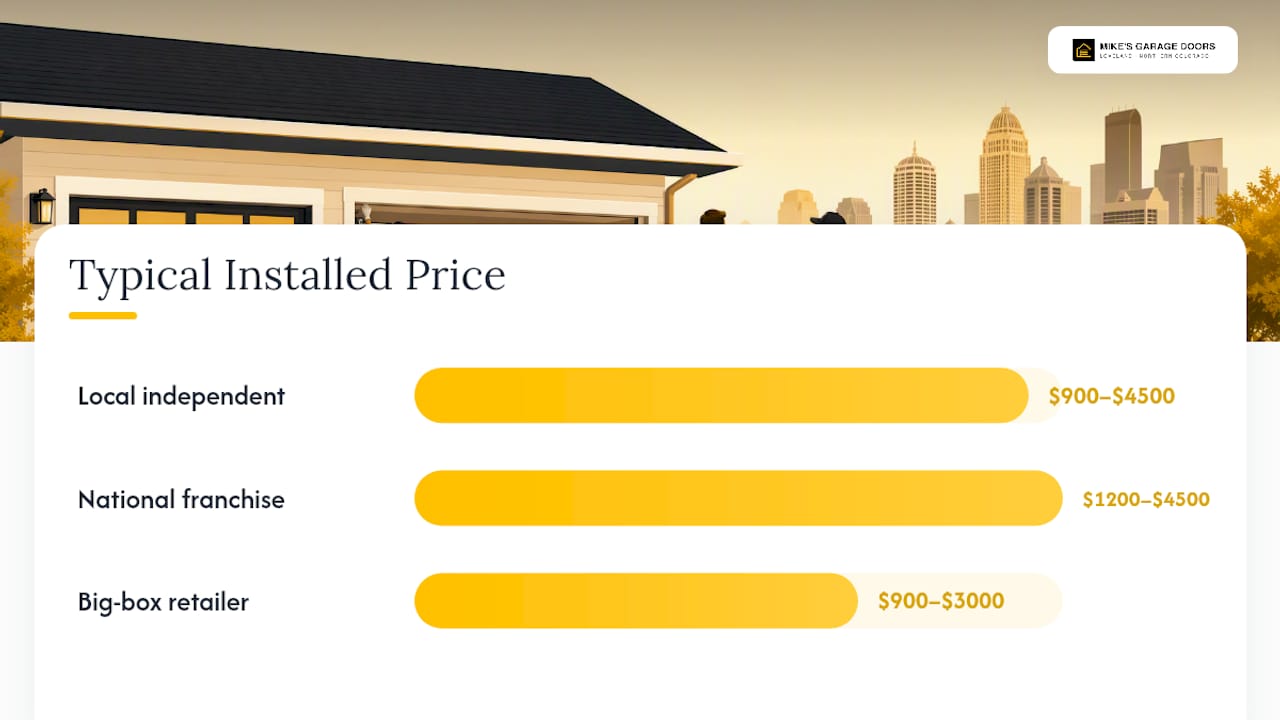
A few patterns show up consistently once you start comparing quotes. Independent shops tend to win on speed and flexibility because they’re not routing your call through a corporate scheduling system. Franchise branches usually win on warranty clarity since the manufacturer relationship is spelled out in writing. Big-box installs can save you money on the door itself, but you lose some control over who actually shows up to install it.
Pick a local independent or franchise branch when the job is urgent, the opening is nonstandard, or you want a single point of contact for warranty issues down the road. Lean toward a big-box bundle only when you’re buying a standard-size door with no unusual features and price is the deciding factor.
How Much Should You Budget for a New Garage Door in 2026?
A simple formula gets you within range of most legitimate quotes: (door square footage × price-per-square-foot for your material) + opener cost + labor + disposal/permit fees. Steel doors run roughly $15 to $30 per square foot installed; insulated or custom composite doors push that toward $35 to $50 per square foot.
- Like-for-like insulated steel, 9x7 feet (single-car): A standard 63-square-foot steel door with a belt-drive opener lands around $2,889 to $3,691 installed, per calculator estimates, covering the door, opener, labor, and basic haul-away.
- New-opening large double door, custom width: Expanding or framing a new opening for a double-wide door adds carpentry and possibly electrical work, pushing the total toward $4,000 to $4,500 or higher once permits and structural work are factored in.
What pushes a quote toward the top of the range? Custom widths beyond standard 9 or 16-foot openings, finished living space above the garage that requires extra insulation and fire-rated materials, new electrical circuits for the opener, and any permit fees tied to structural changes. Industry cost guides consistently place standard installed costs between $1,200 and $4,500, and note that garage door replacement remains one of the higher-ROI projects a homeowner can make.
Seasonality matters too. Spring and fall are the busiest install windows in Kentucky, and lead times for semi-custom doors can stretch by several weeks during those peaks. Winter often has shorter waits if your install isn’t urgent.
What’s the Difference Between a Replacement, a New Opening, and an Opener-Only Install?
Not every “installation” is the same job, and the scope changes both price and timeline significantly.
- Like-for-like replacement: Swapping an existing door for a new one in the same opening, using the existing track mounts where possible. This is the fastest and cheapest scope, usually finishing in 2 to 4 hours for a standard single-car door.
- Replacement with haul-away: Same as above, but includes removing and disposing of the old door and hardware, adding roughly 30 minutes and a modest disposal fee.
- New opening or new construction: Framing a fresh opening, which involves carpentry, possibly electrical rerouting, and sometimes a permit. Expect an extended installation time, especially if inspection is required.
- Opener-only install: Replacing just the motor unit while keeping the existing door and track. This is the quickest job on the list, often done in 1 to 2 hours.
Most professional installers report standard single-car jobs taking 3 to 4 hours, with two-car or more complex installs running 4 to 6 hours. Framing repairs, unexpected electrical issues, or oversized custom doors are the usual culprits when a job runs long.
Permits typically come into play only when you’re changing the size of the opening or altering load-bearing structure. For a straight swap, most Louisville jurisdictions don’t require one. Reputable installers pull the permit themselves when it’s needed and build that into the quote, rather than leaving it for you to sort out.
How Do You Choose the Right Installer and Avoid Bad Surprises?
Start with the non-negotiables: the company should be licensed and insured, willing to provide a written, itemized estimate, and clear about manufacturer versus installer warranty terms. Check their standing through a resource like the BBB profile database and look for recent Google reviews that mention actual install experiences, not just star counts.
When you’re on the phone or sitting through an in-home estimate, run through these questions:
- What’s your current lead time for a standard door versus a custom order?
- Which brands do you carry, and can I see samples or a showroom?
- Can I get an itemized breakdown, including labor, disposal, and any permit fees?
- What’s the spring cycle rating on the torsion spring you’re installing?
- What opener model are you quoting, and does it include battery backup?
- Is the installer’s labor warranty separate from the manufacturer’s parts warranty, and how long does each last?
- Who is responsible for pulling a permit if the job requires one?
- Do you charge extra for weekend or emergency scheduling?
- What happens if you discover framing damage once the old door is removed?
- Can you provide two or three local references from jobs completed in the last year?
- Is a deposit required, and what percentage is due before work starts?
- What’s your policy if the door doesn’t operate correctly after the first week?
Pro Tip: Ask every installer for the exact same spec sheet, door size, R-value, opener model, and spring rating, before you compare prices. A $400 gap between two quotes usually means one of them left something off the invoice, not that one installer is simply cheaper.
Watch for red flags: quotes dramatically below every other bid, pressure to pay the full amount upfront, no written warranty document, or a crew showing up in an unmarked vehicle with no company signage. Any of those should send you back to your shortlist.
What Garage Door Materials and Openers Should You Consider?
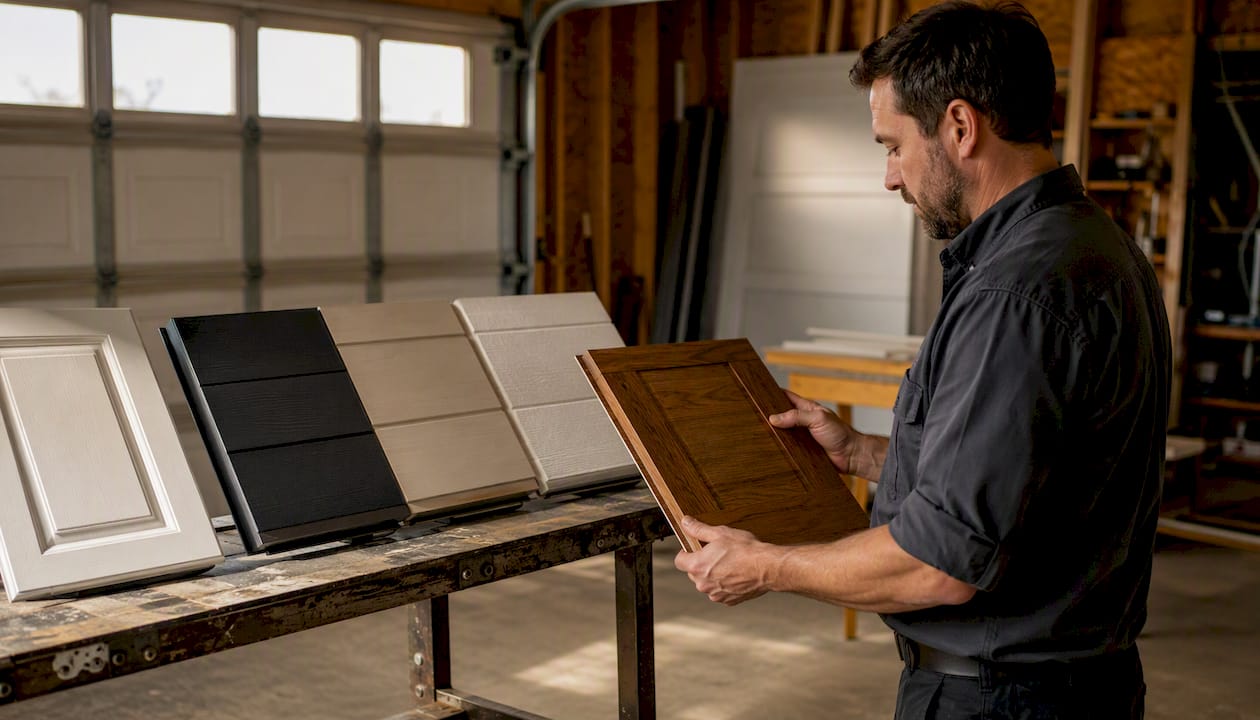
Steel remains the most common choice for Louisville homes because it balances cost, durability, and low maintenance. Aluminum costs less but dents more easily and suits detached garages better than daily-use doors. Composite and fiberglass options resist Kentucky’s humidity swings well and mimic wood grain without the upkeep. Solid wood delivers the best curb appeal but demands the most maintenance and carries the highest price tag.
Insulation matters more than most buyers expect. If your garage is attached to conditioned living space, or you’ve got a room above it, an insulated door with a meaningful R-value keeps energy costs down and reduces noise transfer into the house. Uninsulated doors work fine for detached, unheated garages.
Opener choice affects both price and daily experience:
- Chain-drive: Least expensive, most durable, but the loudest option.
- Belt-drive: Quieter, moderate price increase, good for attached garages near bedrooms.
- Jackshaft (wall-mount): Frees up ceiling space, useful for garages with limited headroom or storage lifts.
- Smart openers with battery backup: Add roughly $200 to $400 over a basic model but pay off in convenience and resale value, according to calculator-based cost breakdowns.
Homeowners consistently underestimate how much daily annoyance a loud, jerky opener creates. Spending an extra couple hundred dollars on a quieter belt-drive unit with battery backup is one of the few upgrades that pays for itself in daily comfort rather than resale math alone.
Manufacturer brands you’ll commonly see quoted include major national door and opener makers. The key distinction to understand is that the manufacturer’s warranty covers the door panel and hardware defects, while the installer’s warranty covers labor and workmanship. A great door installed badly is still a bad install, so ask which warranty covers what before you sign anything.
When Should You Repair Instead of Replace, and What Hidden Fees Show Up?
This isn’t a strict formula, but a reasonable gut-check when a technician quotes you a big repair bill on an aging door.
Torsion springs carry real risk if handled incorrectly, which is why understanding how garage door springs work is critical for safety, not just cost. If your installer mentions the springs are original to a door older than 10 to 15 years, factor that into your repair-versus-replace decision.
Watch your invoice for these common add-ons, which regularly get missed when comparing quotes:
- Haul-away and disposal: $50 to $100
- Torsion spring upgrade: $75 to $150
- Reinforcement strut for the opener: $35 to $75
- Weatherstripping replacement: $40 to $90
- Permit fees, when the opening size changes
Get two or three written quotes before committing, and ask each installer for the exact spring cycle rating and opener model number so you’re comparing equivalent hardware, not just a bottom-line number.
What Should You Do Before Calling an Installer?
Getting an accurate quote fast comes down to preparation. Here’s the order that saves the most back-and-forth:
- Measure the existing opening’s width and height, and note the ceiling clearance above it.
- Take photos of the inside and outside of your current door, including the track and opener.
- Note anything unusual: finished space above the garage, an unusually narrow opening, existing electrical near the opener location.
- Write down your top three to five questions from the checklist above so you don’t forget them mid-call.
- Request two or three written quotes from local licensed installers before making a decision.
Send the installer your measurements and photos ahead of the visit. It speeds up the estimate and often means they arrive with the right hardware already loaded on the truck.
- Most reputable Louisville installers schedule the in-home estimate within a few days of your call.
- Expect a deposit somewhere between 10% and 50% depending on whether the door is a custom order or in-stock.
- A written follow-up estimate should arrive within 24 to 48 hours of the visit, confirming the exact spec and total price.
How Do You Pay for a New Garage Door Installation?
Most Louisville installers accept standard payment methods: credit card, check, or ACH bank transfer, with a deposit due at booking and the balance collected on completion. Many companies, including national franchise branches, also offer third-party financing plans that break the total cost into monthly payments, often through partnerships with consumer lending services. Big-box retailers frequently promote store credit cards with promotional zero-interest periods for larger purchases.
If financing matters to you, ask upfront whether the installer offers in-house payment plans or works with a financing partner, and get the interest rate and term length in writing before you sign. Some independent shops don’t offer financing directly but will accept a larger deposit split into two payments instead. Either way, confirm the payment schedule is spelled out in your written estimate, not just discussed verbally.
Why We Recommend Licensed Local Installers
I keep coming back to the same conclusion after looking at how these jobs actually go wrong: the failures aren’t usually about the door itself, they’re about who’s standing behind it a year later. A licensed local installer knows Louisville’s permit quirks, shows up with insurance that protects your property if something goes sideways during the install, and answers the phone when a spring settles wrong three weeks after the job. That combination of safety accountability and local code familiarity is worth more than shaving $200 off a big-box quote. Family-owned shops that give transparent phone estimates upfront, rather than making you wait for an in-person visit just to hear a rough number, tend to build the kind of trust that shows up in same-day repair rates and honest warranty handling down the line.
A Different Path If You’re in Northern Colorado, Not Louisville
Everything above applies directly if you’re comparing local independents, franchise branches, and big-box installers in the Louisville market. If you’re reading this from Loveland or elsewhere in Northern Colorado, the same hiring logic applies, but you don’t need to build a shortlist from scratch. Mikes garage doors Loveland colorado offers the same trust signals this guide tells you to look for: transparent phone estimates before a technician ever steps on your property, a family-owned operation that handles its own warranty claims directly, and a track record of same-day repairs for issues like broken springs and faulty openers.
The difference from hiring a big, multi-branch franchise is directness. There’s no call center between you and the technician who actually shows up. Estimates happen over the phone before you commit to a visit, which eliminates the guesswork this whole guide is designed to help you avoid.
If you’re in Loveland or Northern Colorado and need a repair, installation, or a straight answer about what a job should cost, browse Mike’s garage door services and request a phone estimate before you schedule anything.
Sources
- Garage Door Replacement Cost
- Garage Door Installation: What To Expect (2026 Guide)
- Garage Door Replacement Cost 2026: Complete Price Breakdown
Share the exact spec, door size, R-value, opener model, and spring rating, from these sources with any installer you’re comparing, so every quote you get back is measuring the same job.
FAQ
How much should garage door installation cost?
A standard single-car replacement typically runs $900 to $2,200 installed, while a double-car door runs $1,800 to $4,500, depending on material, insulation, and opener choice.
What are some reputable garage door companies in Louisville, Kentucky?
Louisville homeowners typically choose between local independent installers, national franchise branches, and established dealers like Overhead Door Company of Louisville; check each company’s BBB profile and request written warranty terms before booking.
What brand of garage door is best?
There’s no single best brand; steel doors from major manufacturers offer the best balance of durability and cost for most Louisville homes, while insulated composite or wood options suit buyers prioritizing curb appeal over budget.
How much does it cost for a big-box retailer to install a garage door?
Big-box installation services typically price bundled purchase-and-install jobs between $900 and $3,000, though actual installation is usually subcontracted, so ask directly about the installer’s labor warranty before booking.
Do I need a permit for garage door installation in Louisville?
Most like-for-like replacements don’t require a permit, but new openings or structural changes typically do; a licensed local installer usually handles the permit process directly.
Recommended
Need a hand with your door?
Talk to a real tech — most calls are diagnosed in under two minutes.


